Maine·Winter Harbor·Sept-Oct 2025
Onboard the Atlantic Viking
A day with a Winter Harbor Lobsterman
As published in the Unplug Magazine print (Summer 2026 Issue)
Available in select Barnes & Noble stores nationwide.
Photography and Essay by Robert Lundberg
It’s 4:00 am. In a bit of a haze, I’m slowly waking. The jarring of the alarm makes my nerves shake. I had to meet Fred by the dock around 5:15 am or so. I rush to brew a pot of coffee, pack a few snacks for sustenance, ensure my camera gear is ready to go, most importantly I make sure my Grudens and boots are in the truck. My first time out on a lobster boat, and the expectations? Unclear.
Fred warned me “it’ll be a long day”. Stepping out from the warmth of my quaint bnb, the 4:30 a.m. Downeast air stings my lungs. I look up into the clear morning sky, a black canvas dotted with the dim glow of stars.
I find myself in a fishing village with a population of 461. Winter Harbor, Maine.
At the wharf, flood lights create cinematic profiles against the pitch black. Fred and his sternman were ready to go by the time my boots hit the deck.
A strong pride radiates from Fred's stance, his light grip upon the throttle, a blue eyed glare overlooks the horizon, a groomed beard keeps the chill at bay, while bright orange Grudens keep him dry.
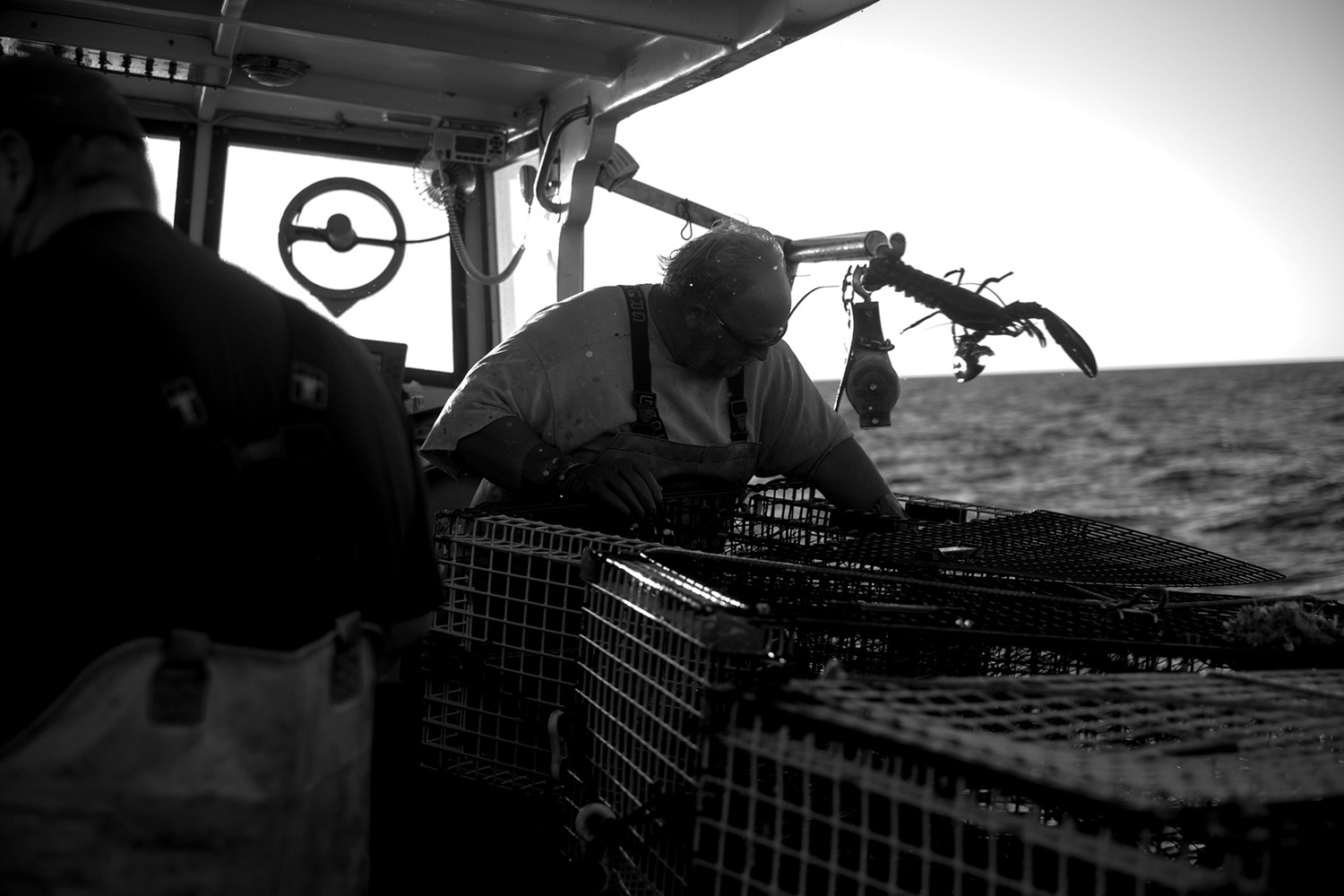
It's around 5:15am, without looking at his navigational instruments we head off, the sun slowly creeps over Schoodic point creating a purplish gradient, the coast a silhouetted form. We attempt conversation, but the roar of the diesel mutes anything significant, leaving Fred, Freeman, and I looking outward for the first buoy to appear.
The 38 ft long and 16 ft wide Canadian built Atlantic Viking rides with 510 horses. Propelling us through the dark waters with a D11 Volvo engine leaving a foamy wake behind. We were heading out into Frenchman's Bay, to start hauling the first of Fred’s 800 traps.
I ask in a half scream “how do you know where to place your traps?”
Fred “it’s a bit of an art form, all in all we have our spots”
He then went back to searching for his custom painted buoys.
Freeman wears a black ball cap, the bill encrusted with the grime of incalculable hours on the sea. A fresh Crowns cigarette hangs from his mouth, a calm moment before the work begins.
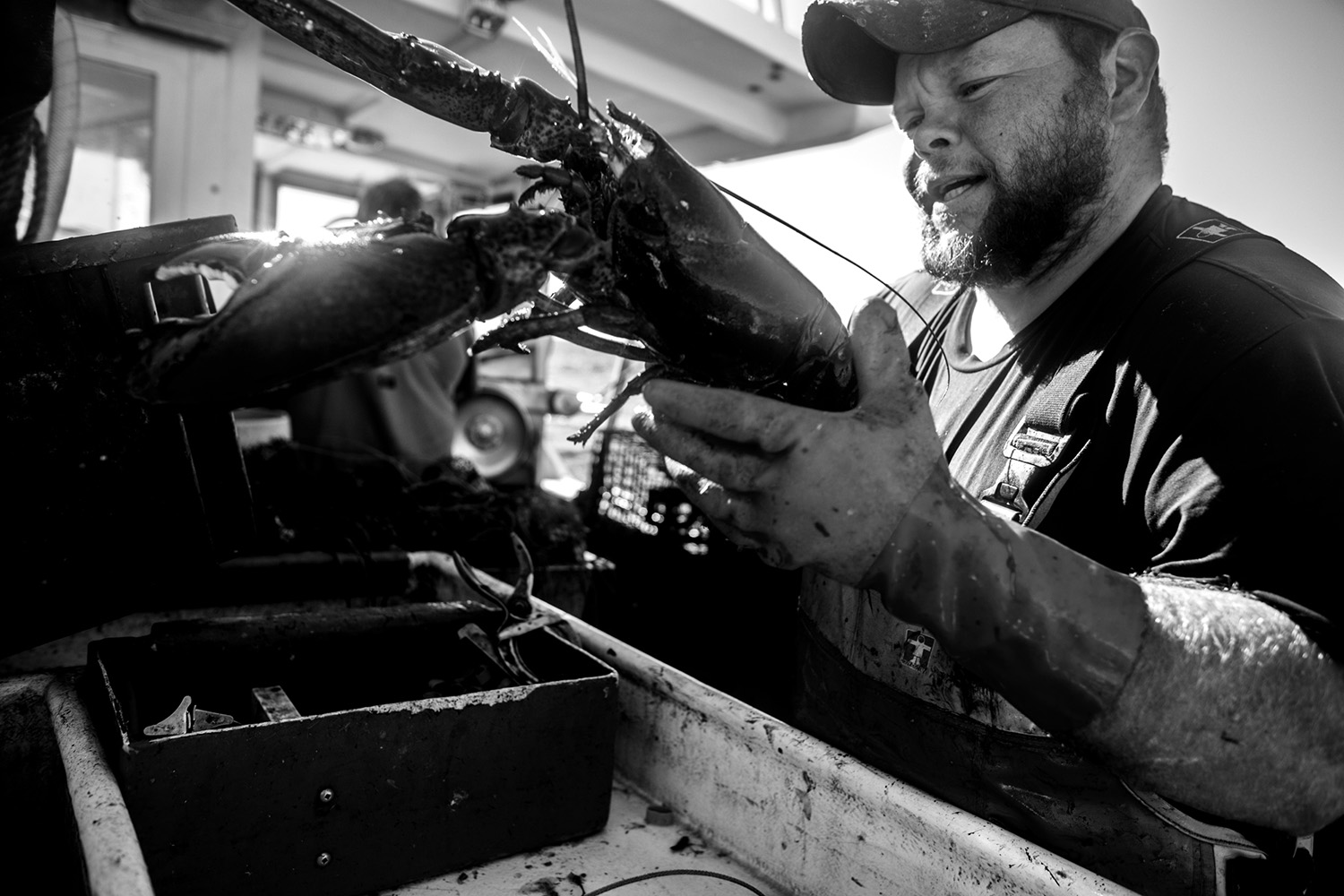
The pulley starts wheeling, working hard to grasp the first string of traps that morning. Fred at the helm catches trap one, using his broad upper body he slides the 125 lb lobster pot down the rail to Freeman. It’s a sternman’s job to decide a lobster’s fate: his gloved hands pulling out lobster after lobster measuring for size, checking if it’s female-v-notched-berried, or oversized. As required, the non-keepers go back.
The keepers are tossed in sectioned bins, claws bound with rubber bands-then dropped into a tank for storage until the end of day count.
Invasive species in the likes of the cunner-are swiftly dispatched as bait.
Fred shows an example: a small female lobster with patchy spots of “berries” upon its tail, it’s clear something has been eating em.
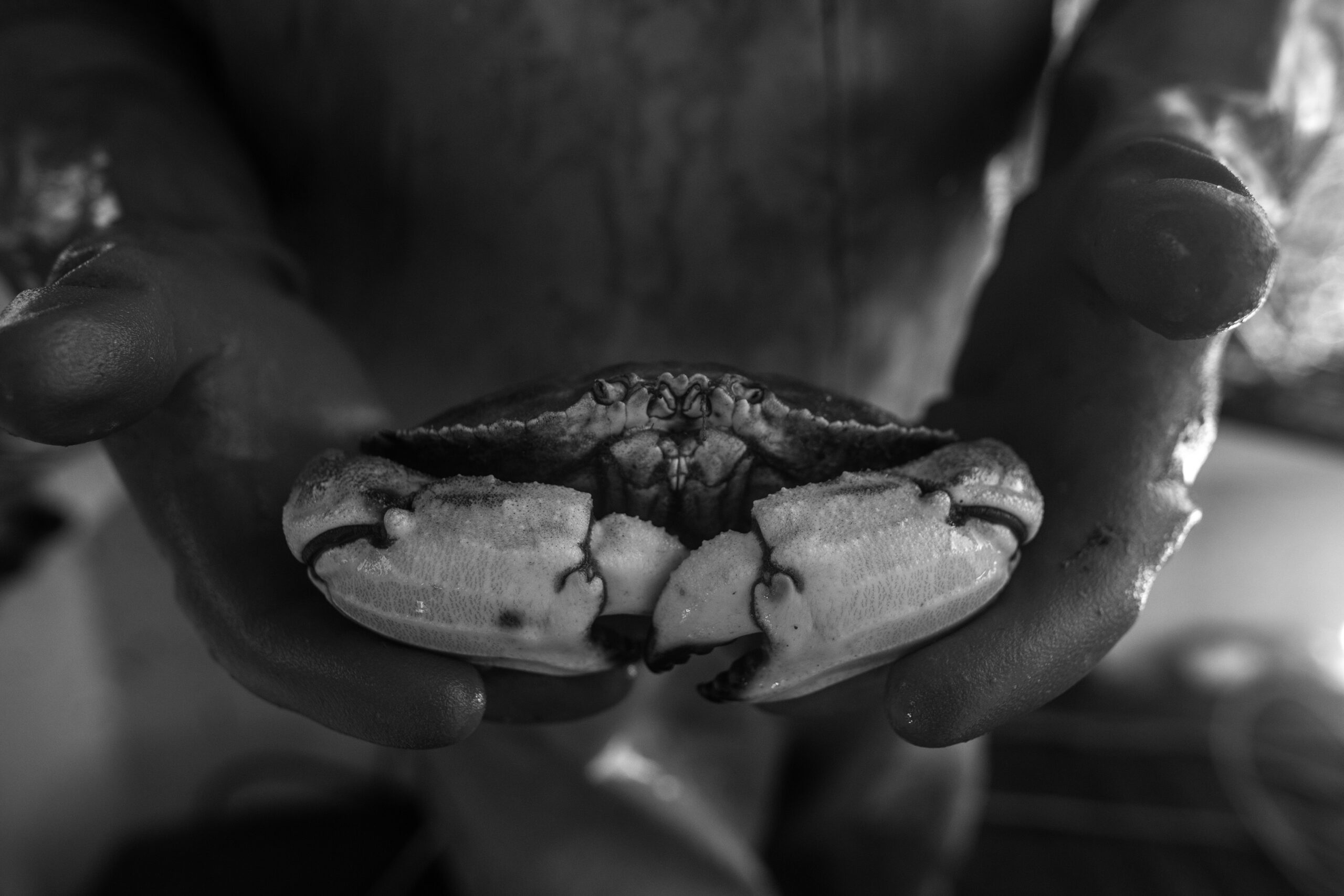
The crabs eat the bait, the cunner eats the eggs; they both must go.
A single Jonah Crab is smashed, its carcass tossed back into the trap, while its fellow crabs fly into
Frenchmen’s Bay.
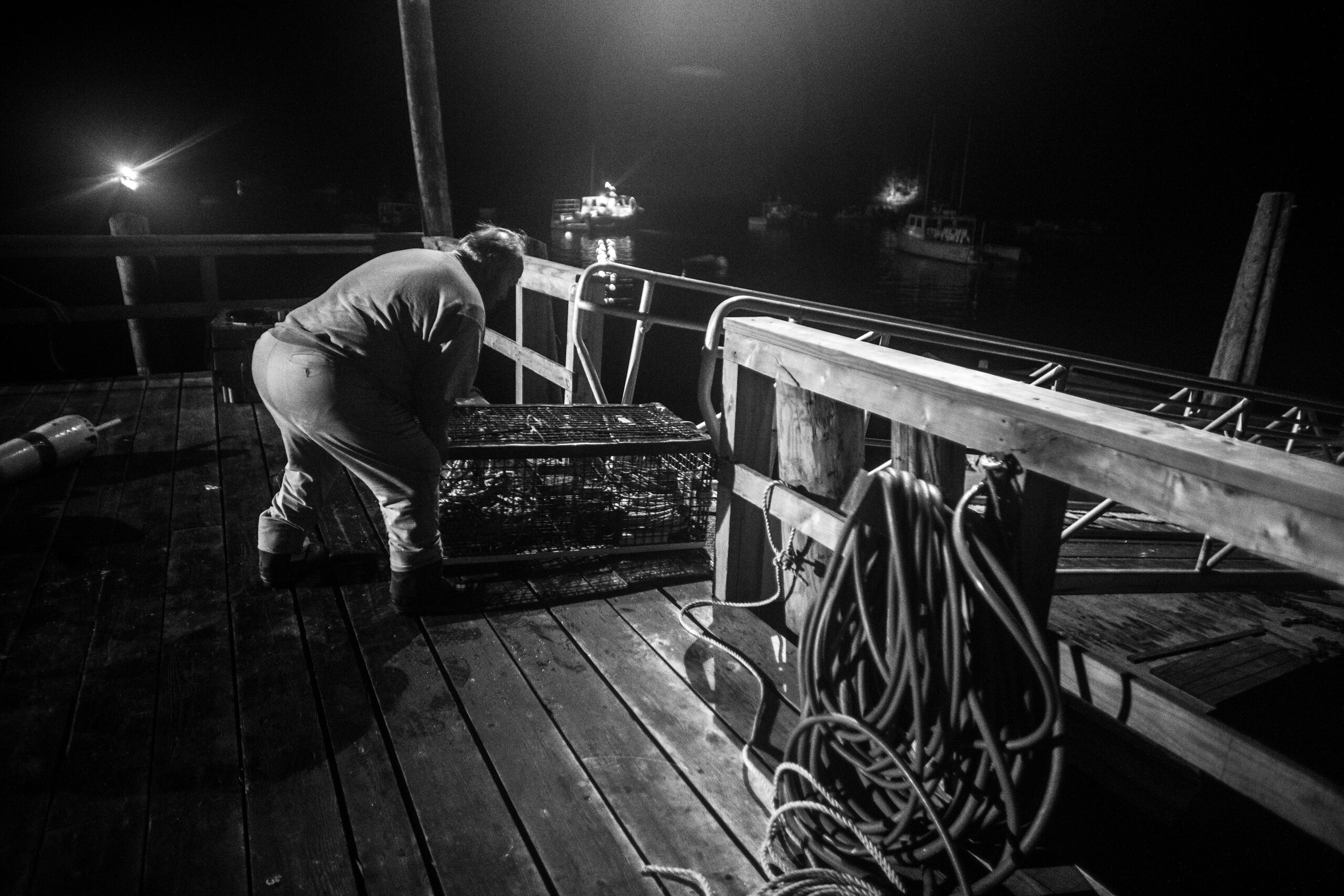
Once the trap has been cleared, Freeman grasps a bait bag and ties it swiftly into the pot. With the trap baited he slides it down the rail. It's the same for the next trap, then the next, until the string is complete. A buoy hangs high in the air as the line of traps speed back into the depths…
As the last one splashes in, Fred navigates to the next location. The diesel engine drones onward, the gulls hover above seeking to feed their hungry bellies with scraps. The smell of baitfish saunters, my nostrils unaccustomed to such a stench, a slight sense of nausea arises in tandem with the swaying of the Atlantic Viking. I find a sense of calm at the stern, somewhere out there: was Nova Scotia. Fred and Freeman continue the work. From the corner of my eye, I see Freeman reaching into a grey bin.
Looking in I see- a muddied soup of maroon broth with small grey fish bound and stacked in cohesion: menhaden. Blue rubber gloves come snatching and jamming the fish into netted bait bags then go back into the pot to feed “the bugs”.
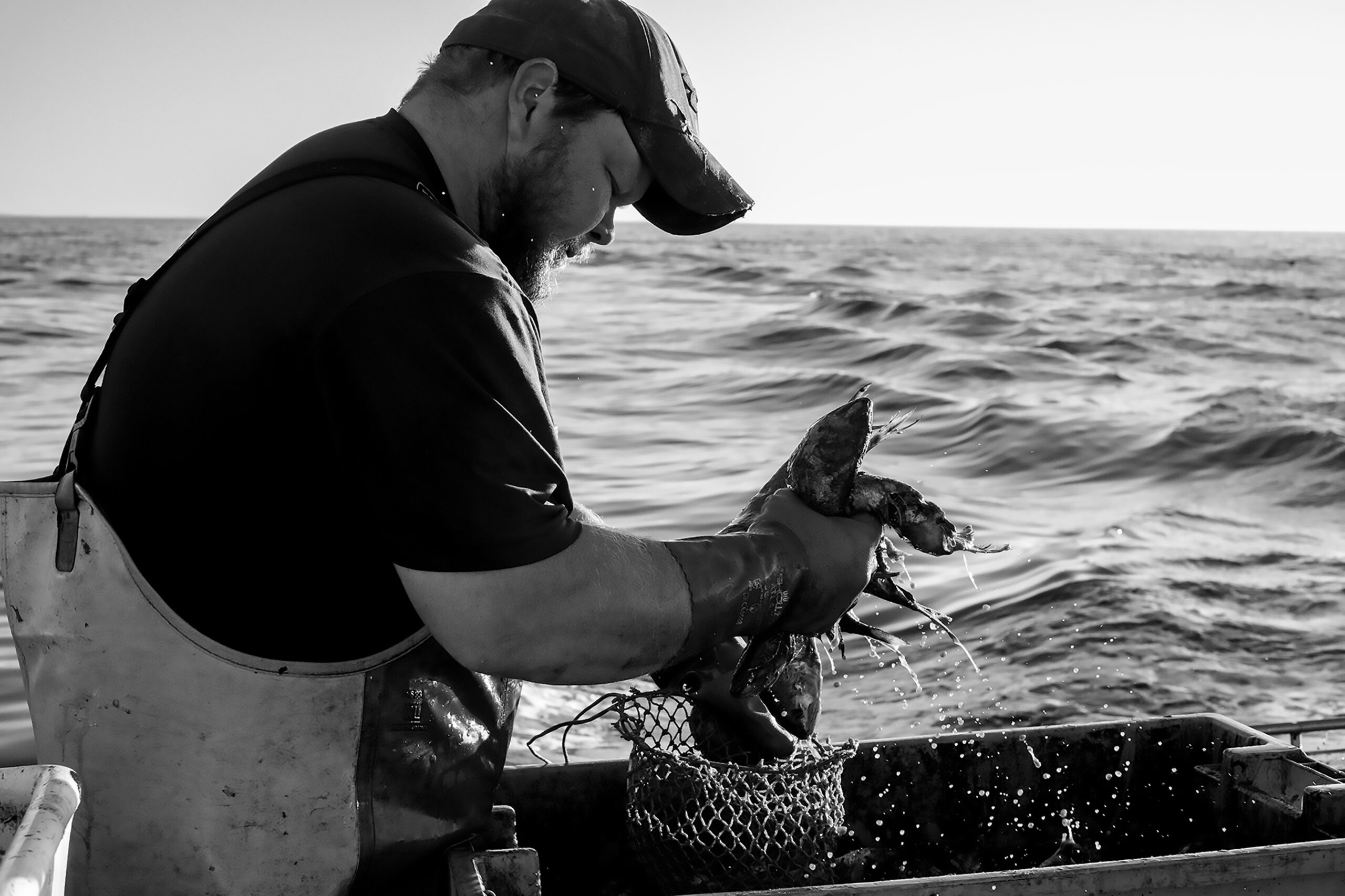
Fred came over and said:
“Some folks use pig skin mixed in with the fish, not me though, I don’t believe
land animals should go into the sea, it's not natural”.
“Plus, the hide makes the lobsters taste weird-like pork”.
Adding “We catch our own”
In the center of the deck, the separated lobsters stack upon each other attempting to find a corner to hide. A loose plastic shopping bag finds itself in one of the bins and immediately a lobster backs its tail into the bag claiming a temporary home, others follow.
Freeman chuckles.
We were heading back towards Winter Harbor.
We were heading back towards Winter Harbor. Both Fred and Freeman’s Grudens were off.
Fred stared gently towards land, while Freeman lit another Crowns cigarette. The hum of the engine casting the only sound. All of the traps for the day had been collected, rebaited, and dropped back down into the waters of the Gulf of Maine. The only item left was to count and sell the day's catch.
Pulling up to the dock, my boots hitting solid ground for the first time since the early morning, my legs wobbled as I walked back up to my truck, smelling of baitfish and open water.
I smiled, as Fred was right,it had been a long day and I had six more of them to go.
#Maine #FieldNarrative #Workingwaterfront
Ongoing Projects
Frenchman Bay Dispatches
Read: Gulf of Maine 001
Lobstering · Frenchman Bay · Gulf of Maine
The Gigawatt Project
Read: The Gigawatt Concept
AI Infrastructure · Washington DC
[ Radio: SCSP AI Special Broadcast ]!
[Doc: Int transcripts ]
Rob Lundberg Photo | 2026
Instagram :
Archival-account :
Publicity | City Bird Publicity
Website :
City Bird Publicity
Uncontaminated Sound Media Series:
Instagram :
WGXC 90.7 FM Radio Broadcast :
Youtube :